
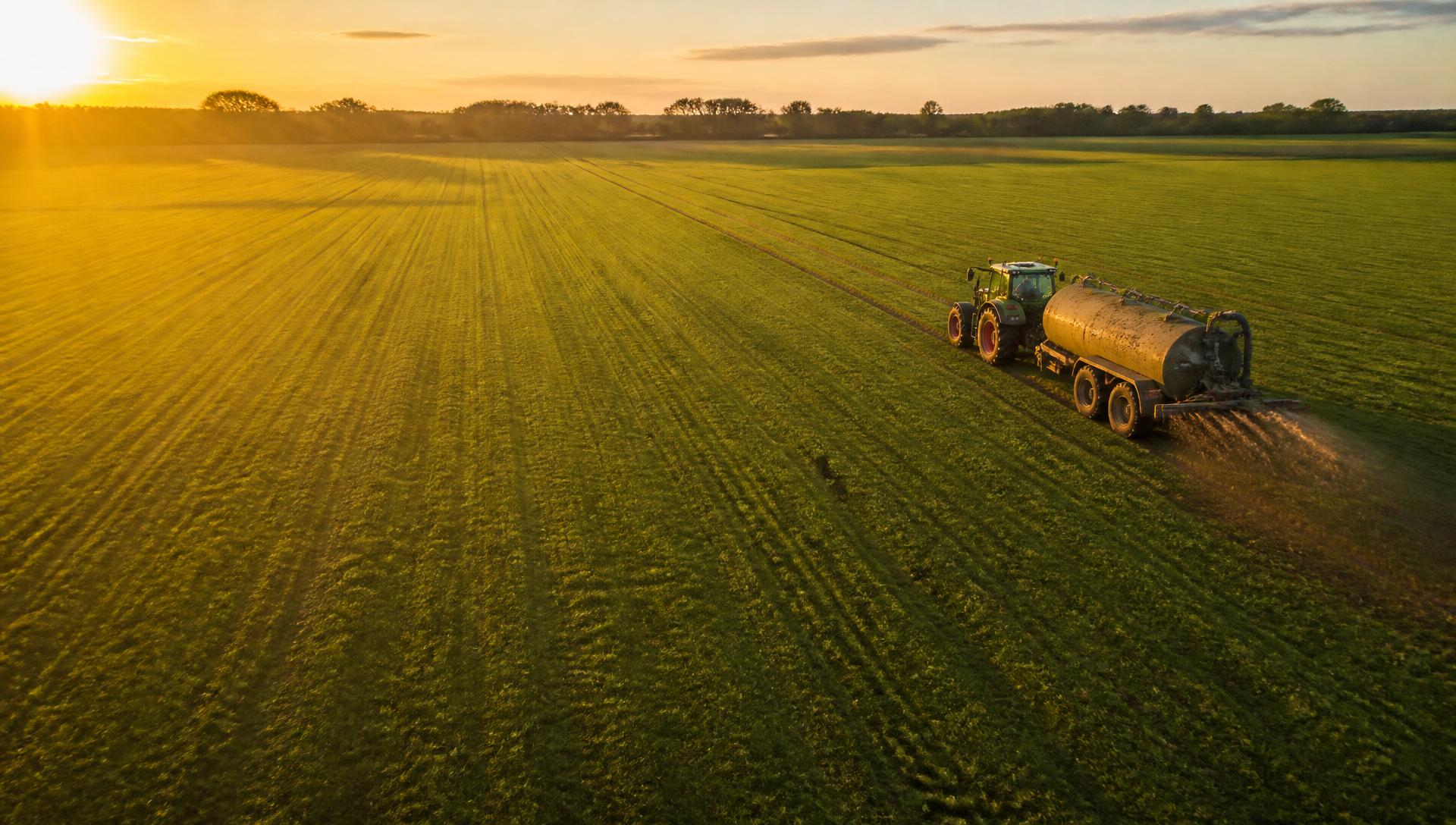
Digestate from biogas —
a natural fertiliser
Rich in nutrients, safe and proven organic fertiliser. An excellent alternative to mineral fertilisers and to raw manure and slurry.
Definition
What is digestate?
Digestate is a nutrient-rich liquid residue produced in biogas production. Agricultural waste such as slurry, manure, maize silage, sugar-beet pulp or apple pomace is broken down by microorganisms under tightly controlled fermentation conditions.
The end product is digestate — a natural organic fertiliser and an excellent alternative to mineral fertilisers, raw manure or slurry.
Advantages
Why use digestate?
High nutrient availability
Digestate contains 4–5% nitrogen, mostly in ammonium form readily taken up by plants.
Better soil structure
Regular use increases humus and organic matter — the soil retains more moisture.
Soil deacidification
Digestate is alkaline (pH > 7), reducing the need for intensive liming.
Biological activation
Stimulates beneficial microorganisms and earthworms, speeding up residue breakdown.
What you gain
Benefits for farmers and the environment
Using digestate is more than care for yields and the environment — it brings real financial savings too.
- Lower fertilising costs by reducing purchases of expensive mineral fertilisers.
- Hygienised fertiliser — free of weed seeds and pathogens (Salmonella, E. coli).
- Lower environmental impact from odour compared with raw slurry.
- Better soil structure, water retention and lower CO₂ emissions.
Safety
Quality control and institutional oversight
Digestate quality is monitored chemically and biologically, and the production process is supervised by the relevant authorities, including the Veterinary Inspectorate. Farmers can therefore use it on their fields safely and in line with requirements.